
Key Takeaways
- Character Limits: Keep Shopify image alt text under 125 characters to ensure full compatibility with screen readers like JAWS and NVDA.
- Naming Convention: Use descriptive, hyphen-separated file names (e.g.,
navy-linen-button-down-shirt.jpg) rather than generic camera defaults likeIMG_001.jpg. - Indexing Speed: Optimized images with descriptive alt text and appropriate schema markup index up to 40% faster in Google Image Search.
- Accessibility Compliance: Descriptive alt text is a non-negotiable requirement for ADA and WCAG 2.1 compliance for e-commerce storefronts in 2026.
Pixels carry weight far beyond their visual appeal. For a Shopify merchant, an image is a data packet that, when labeled correctly, serves as a direct bridge between a customer’s search query and your product catalog. Mastering shopify image alt text seo ensures your visual assets work as hard for your discoverability as they do for your conversion rates.
The Anatomy of a Search-Optimized Image
Google’s Vision AI has become remarkably sophisticated by 2026, yet the textual metadata attached to an image remains the primary signal for ranking and indexing. When you upload a product photo to Shopify, the platform generates several versions of that file. If the original source is poorly named, the entire downstream chain of thumbnails and hero images carries that optimization debt.
Technical Specs for Image Metadata
To maintain high performance on Shopify's CDN, adhere to these specific thresholds for your 2026 storefront.
| Feature | Recommended Specification |
|---|---|
| Alt Text Length | 80–125 characters |
| File Naming Style | lowercase-hyphenated-words.jpg |
| Ideal File Size | Under 200 KB for product shots |
| Format | WebP or AVIF (Shopify auto-converts) |
| Max Resolution | 4472 x 4472 pixels (Shopify limit) |
Accuracy Over Keyword Density
The most common mistake in shopify image alt text seo is "keyword stuffing." In 2026, search engines easily identify when a merchant lists twenty variations of "blue dress" in a single alt tag. Instead, describe the specific image. If the photo is a close-up of the stitching on a leather wallet, the alt text should read: "Close-up detail of reinforced saddle stitching on a cognac vegetable-tanned leather wallet."
Pro-Tip: If an image is purely decorative (like a background gradient or a divider line), leave the alt text empty. Screen readers will skip it, providing a better experience for visually impaired users without hurting your SEO.
Creating a Faster Indexing Workflow
Indexing speed is a measurement of how quickly Google discovers, crawls, and adds your new product images to its search results. Large-scale merchants can use the Free Shopify Store SEO Checker to identify which product pages currently lack alt text or have broken image links, which are common bottlenecks for crawlers.
Standardizing File Names Before Upload
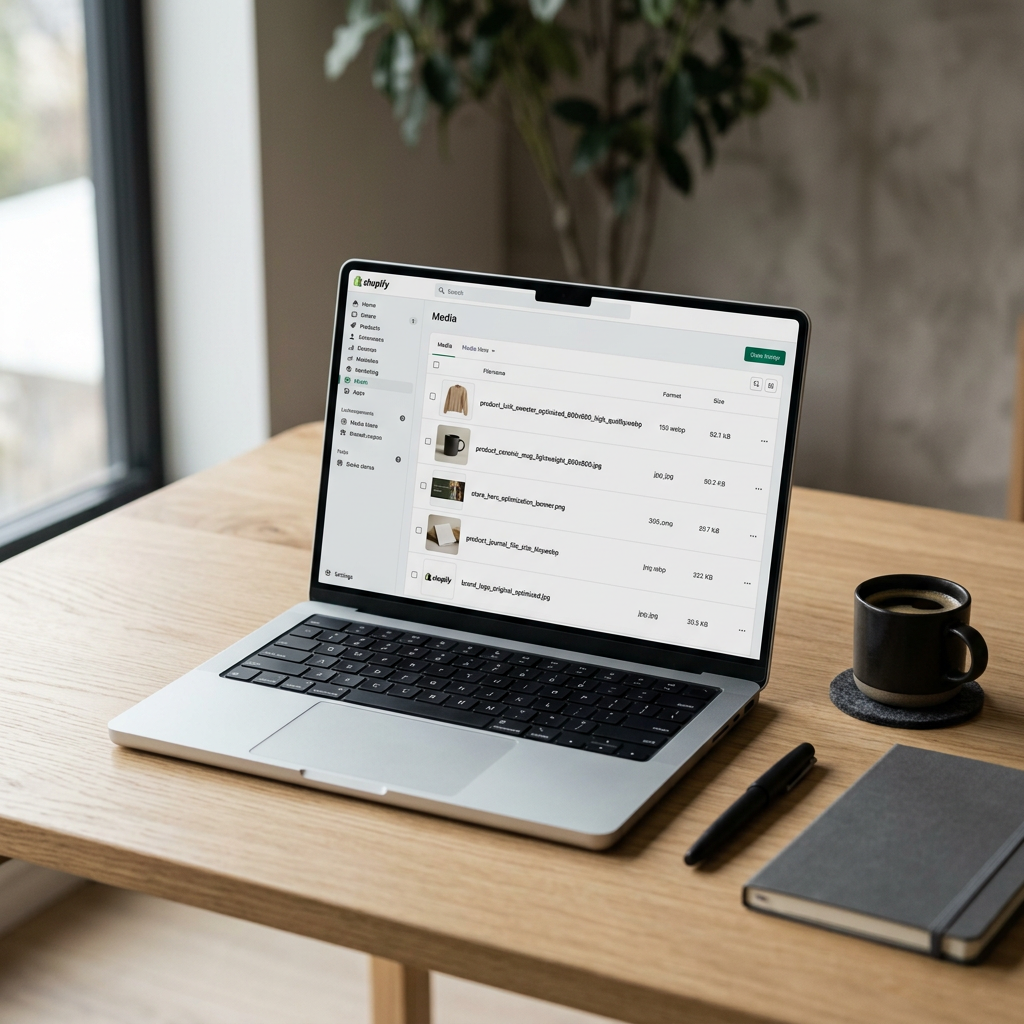
Shopify’s CDN retains the original file name you upload. If you upload final_export_v2.jpg, that string becomes part of the image URL. A better approach is to rename files locally or using a bulk tool before they hit the Shopify admin. Use a structure like [brand]-[product-name]-[color]-[view].jpg. This provides context even before the alt text is parsed.
Utilizing Online Store 2.0 Liquid Attributes
Modern Shopify themes allow for dynamic alt text through Liquid. By using {{ image.alt | escape }}, the theme pulls whatever you have entered in the "Edit alt text" field in the Shopify Admin. To ensure you are meeting accessibility standards while keeping your SEO sharp, you can use the Free Shopify Alt Text Generator to produce high-quality, screen-reader-safe descriptions for your entire catalog.
Advanced Strategic Context
Shopify merchants often forget that alt text is also used by Pinterest and other social discovery engines. When a user pins a product directly from your site, the alt text frequently serves as the default pin description.
Matching Alt Text to Product Descriptions
Consistency across your page elements reinforces the "topical authority" of the URL. Ensure the keywords used in your alt text mirror the terminology found in your H1 tags and descriptions. If you need to refresh your copy to better align with your imagery, the Free Shopify Product Description Generator can help create benefit-driven content that matches your visual metadata's tone.
Monitoring Performance in Search Console
To see if your shopify image alt text seo efforts are working, navigate to Google Search Console and filter the "Search Type" to "Image." Compare the click-through rates (CTR) of images before and after optimizing their alt text. You should see a steady climb in impressions as Google begins to serve your images for long-tail, descriptive queries rather than just broad category terms.
Tip: If you are unsure which keywords to prioritize in your alt text, use the Free Shopify Blog Topic Generator to see what niche-specific questions customers are asking; these often contain the descriptive adjectives that belong in your image metadata.
Conclusion
Optimizing your Shopify images is a high-leverage activity that pays dividends in both accessibility and search visibility. By moving away from generic file names and embracing descriptive, accurate alt text, you transform your storefront into an organized, crawlable asset. Consistent attention to these small details is what separates a boutique brand from a generic dropshipper in the 2026 e-commerce landscape.
Analyze your current on-page performance for free with the Free Shopify Store SEO Checker.
Frequently Asked Questions
Does Shopify automatically generate alt text for images?
No, Shopify does not automatically generate descriptive alt text. It defaults to using the product title if no alt text is provided in some themes, but for optimal SEO, merchants must manually enter custom, descriptive alt text for each image.
What is the best file format for Shopify images in 2026?
Shopify's CDN automatically serves images in WebP or AVIF formats to compatible browsers. Merchants should upload high-quality JPEGs or PNGs (under 20megapixels) and let Shopify handle the technical conversion for speed.
How long does it take for Google to index new image alt text?
Indexing can take anywhere from a few days to several weeks. You can speed up the process by submitting your sitemap via Google Search Console after performing a bulk update of your image metadata.